
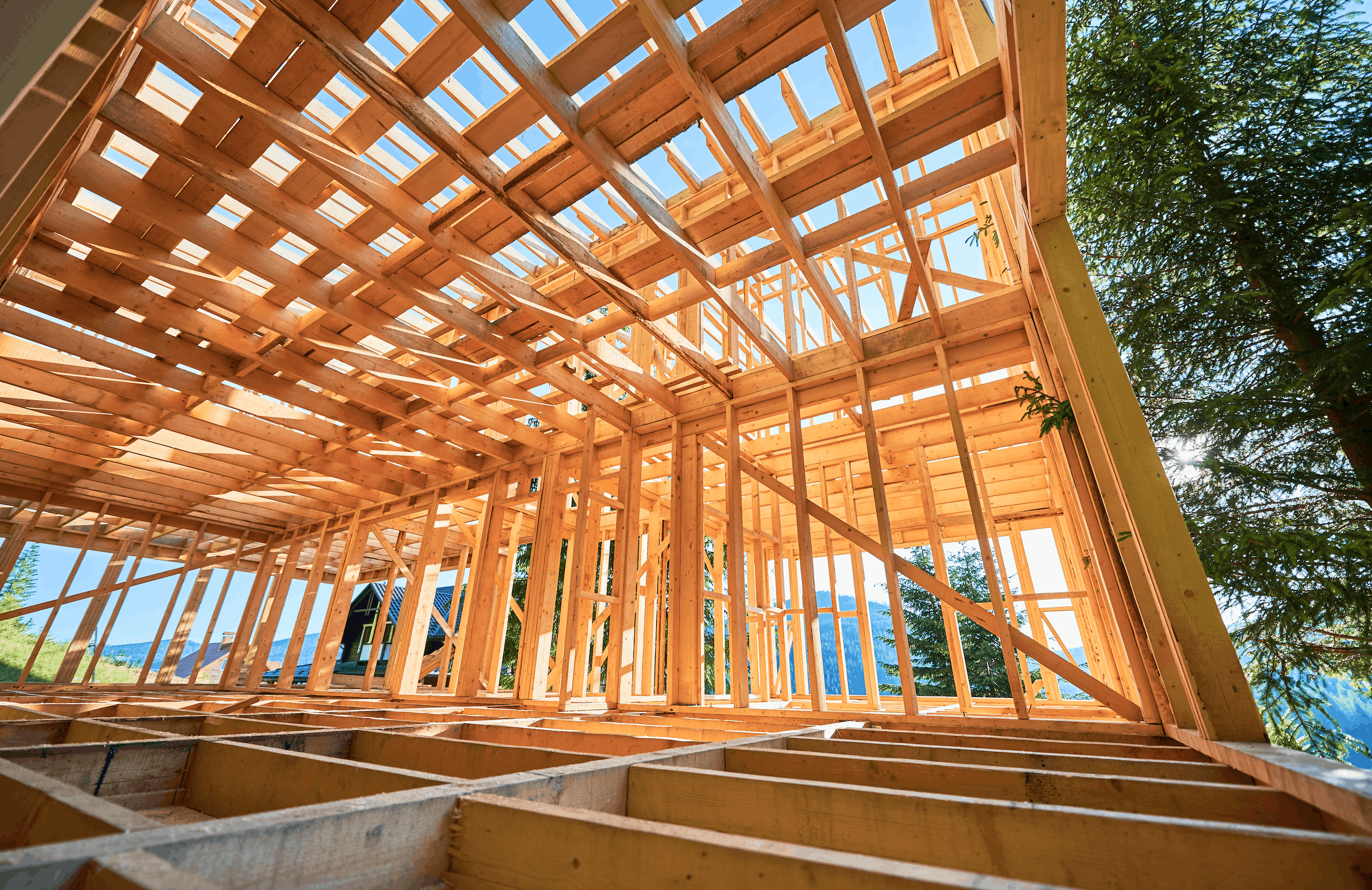
House Framing Basics
House framing has been done in the United States for centuries. It is the structural framework in which most houses are built. It consists of wooden studs, strategically placed in conjunction with top/floor plates to frame out the ‘skeleton’ of a home. When looking to build a home, it is important to understand the mechanics of how the home is constructed and to choose a builder who specializes in the technique that you want. Choice can typically be determined by the style of the house being built or the speciality of the builder. Either way, having an understanding of the options allows you to make a more informed decision.
Framing Techniques
There are different framing techniques to consider when building a house. Texas builders typically choose between balloon framing, platform framing, or timber framing.
Balloon framing
Although not used as often as it once was, is a traditional method where long wall studs are used starting at the foundation of the home, all the way up to the roof, as one long continuous board. The pros of using balloon framing is that it allows for less foundation settling, can be used when building complex structures and is strong against the elements. The major con of balloon framing is that it can be a major fire risk because there are no firestops built between floors.
Platform framing
Also known as stick build, is when a house is built story-by-story, starting at the bottom level and working your way up, one level at a time. This is the most modern and standard of framing practice, due to its lower cost, scalability and efficiency in building timeline. Once completed, the structural framework is typically covered by drywall. This is what most Texas builders choose when building custom or manufactured homes.
Timber framing
Is more of a decorative aesthetic. Think exposed beams and posts. Where platform building uses many studs behind drywall, timber framing utilizes large timber that is used structurally as well as aesthetically. Since this style of framing is considered specialized, pricing can be a lot higher than traditional platform framing. This style is typically seen in higher-end, custom homes.
Framing Terms
Whether you are house framing yourself or choosing a professional, it is good to have a strong understanding of what the basic terms are. This will allow you to be knowledgeable when speaking to your contractor and help assist in any decision making
Studs
A piece of lumber placed vertically in platform framing to provide structural support to the wall. Texas builders typically use two different sizes of studs, either 2x4s, 2x6s or a combination of the two in their builds The lengths of the studs range from 8’, 10’ or 12’, the size used will primarily depend on the ceiling height.
Joists
Larger lumber used horizontally to support the flooring above it, typically used in supporting higher levels or even in decking.
Headers
A larger piece of lumber that is used horizontally to support an open wall, window, or doorway. The header carries the load of the wall, removing the load from the door or window and displacing it across the span of open space.
Sheathing
A flat board, like OSB, can be installed to create an exterior wall or flooring in which additional finishes can be added such as siding or hardwood floors. The sheathing makes the house framing more structurally sound by tying all of the framing together.
Plates
There are two different plates used in house framing; a top and/or bottom plate. The bottom plate is a horizontal 2x4s that is placed on the subfloor/foundation, in which the vertical studs are mounted to. These are typically ordered as 16’ to run the full length of a room. A top plate is used as a cap above the wall studs to frame in the room.
Trusses
Floor and roof trusses are typically pre-manufactured, used to carry the load of a floor or ceiling above it.
Tie-downs/hurricane straps
Most Texas builders are using tie-downs and hurricane straps which is a metal bracket that connects the roof to the walls to the foundation. This gives the house framing more support, especially when faced with high winds.
Choosing a Texas Builder
When selecting a Texas builder to do your house framing, it is important to choose a professional who understands the local building codes and how to navigate the permitting process. They will need to know at which point inspections need to be completed and what items are required. Selecting a builder that is familiar with your local building codes and permitting process will help streamline the process.
Now that you know the basic components that make up house framing, you can discuss with your Texas builder if platform framing or timber framing is right for you. But before you can get to that stage of your build, it is important to engage with a business like Apex Group, who specializes in creating a foundation that allows your Texas builder to install house framing that will be structurally sound.